Ainu culture
Ainu culture in Makubetsu and Tokachi
Senju, where Cirotto stands, was once the site of a large kotan (コタン, village) called Cirotto Kotan. Knowing a little beforehand helps you see more in the exhibition. This page is based on materials published by the town and by national bodies.
Cirotto Kotan, a large village
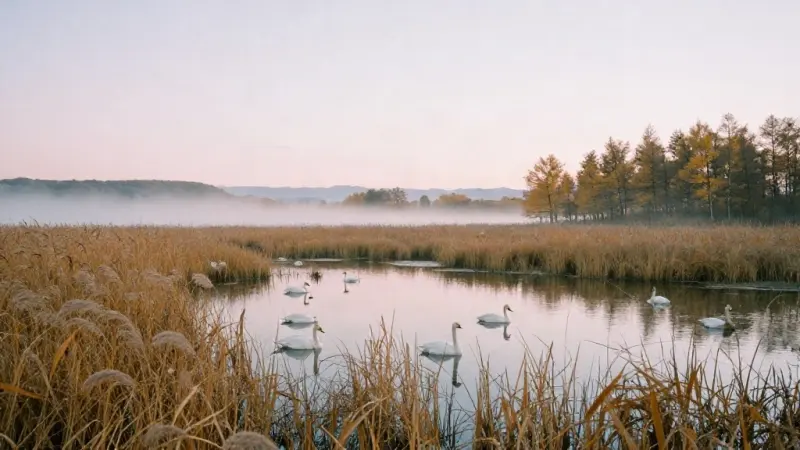
Cirotto Kotan lay in the Senju area, around the Ezo Culture Archaeological Museum. Town materials describe it as a large and prosperous kotan.
A survey in 1855 recorded seven households. According to the town's centennial history (幕別町百年史), the kotan had five family lines. They began when men from Kuttari, Abashiri, upper Otofuke, Kushiro and elsewhere set up homes with women of Makubetsu.
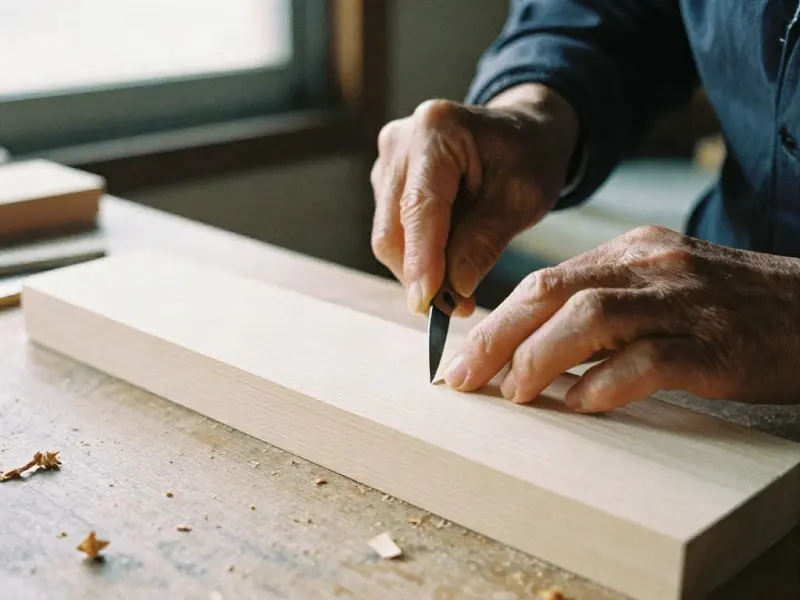
Each Ainu family had its own mark, called イトッパ. It was carved with a small knife on items such as the ikupasuy (イクパスイ), a carved stick used to offer sake. Documents kept at the museum record the family lines and marks of Cirotto Kotan up to the early Showa period (the late 1920s and 1930s).
Source: Town of Makubetsu, "Stories of local culture, Part 2" (in Japanese)
Yoshida Kikutaro and the Ezo Culture Archaeological Museum
Yoshida Kikutaro (吉田菊太郎) was born in 1896 in 白人 (Chirotto, now Senju) in what was then Makubetsu village. His Ainu name was アリトムテ. He served on the village and town councils, and in 1946 he founded the Tokachi Ainu Association and became its chair.
In his later years he was troubled to see Ainu tools and clothing disappearing from everyday life. He decided to gather what his ancestors had left and keep it safe for the long term.
To raise money for a building, he published a book in 1958, "Ainu Bunkashi" (a cultural history of the Ainu). He gave talks around the region and collected donations. The building cost 2 million yen in total. The town's grant covered 200,000 yen. The rest came from donations by municipalities, organizations and individuals.
The building was finished in November 1959 and the opening ceremony was held on 6 December. Its floor area is 124.44 m². He called the display room the "treasure hall" (宝物堂).
Sources: Town of Makubetsu, "Stories of local culture, Part 1" and "Ezo Culture Archaeological Museum" (in Japanese)
What the museum collected
- In total
- More than 1,700 items, counting tools and documents together
- Ritual items
- Inaw (イナウ, shaved wooden offerings), lacquerware, イナウル (ceremonial crowns) and pasuy (パスイ, sticks for offering sake)
- Clothing
- Attus (アットゥㇱ, robes woven from bark fibre) and チカㇻカㇻイミ (embroidered robes)
- Everyday tools
- Dugout canoes, marek (マレㇰ, hooked fishing spears), ルサ (plates woven from grass) and saranip (サラニㇷ゚, woven bags)
- Books, documents and photos
- 231 books, 605 documents and 626 photographs
Most are said to have been collected locally. The materials are now kept and shown in the Exhibition Hall "Ucaskuma". Sources: Town of Makubetsu, "Ezo Culture Archaeological Museum"; Makubetsu Regional Plan for Promoting Ainu Policy (in Japanese)
Rivers were roads, and salmon was the fish of the kamuy
A survey in 1858 counted 78 kotan in Tokachi, with 284 households and 1,336 people. Most kotan stood on slightly raised ground near a river.
Life with rivers and salmon
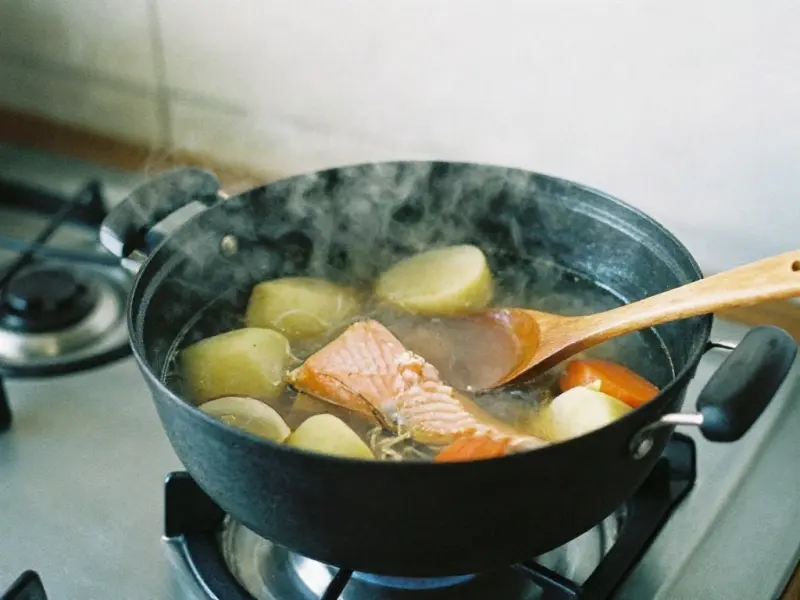
For people living inland, the river was where they drew drinking water and caught fish. It was also a road, travelled by boat.
The salmon that come upriver in autumn were called kamuycep (カムイチェㇷ゚), "fish of the kamuy". Salmon and trout were caught with a marek, a spear with a hook. It is said that people did not take every fish. They left some for the people upstream and for the animals that eat salmon.
In 1883 salmon fishing in the Tokachi River was banned. People who relied on the autumn salmon for a year's food suffered from hunger.
Source: Obihiro Development and Construction Department, Ministry of Land, Infrastructure, Transport and Tourism, "A journey through time along the rivers of Tokachi, Chapter 3: Ainu culture and rivers in Tokachi" (in Japanese)
Kamuy and prayer
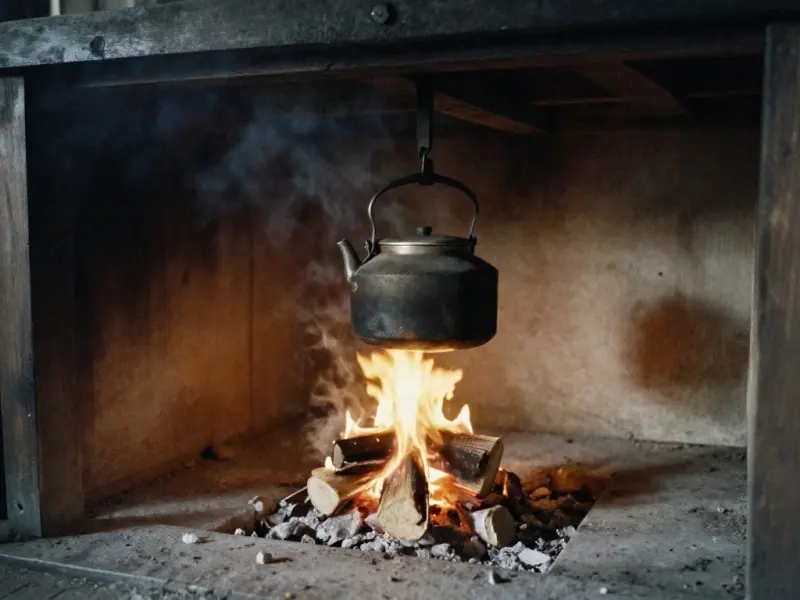
The Ainu respected as kamuy (カムイ) the things that bring blessings to people and the things beyond human power: animals and plants, fire and water, the tools of daily life. Kamuy is often translated as "god", but the meaning is not quite the same.
Prayer to the kamuy is called kamuynomi (カムイノミ). When praying, people offer inaw (イナウ), made by shaving wood. Inaw are ritual implements that carry people's words to the kamuy.
The prayer to welcome the first salmon of the season is asircepnomi (アシㇼチェㇷ゚ノミ). The ceremony to honour ancestors is icarpa (イチャルパ).
At the ceremony for the completion of Cirotto, a prayer for a new house (アシリチセノミ) and a prayer to the kamuy of fire (アペフチカムイノミ) were held. The tradition room in the Community Hall has a hearth, so ceremonies like these can take place there.
Sources: Foundation for Ainu Culture, "The Ainu people: history and the present" (in Japanese); Obihiro Development and Construction Department (as above); Tokachi Mainichi Shimbun (1 October 2026)
Embroidery, wood carving and weaving
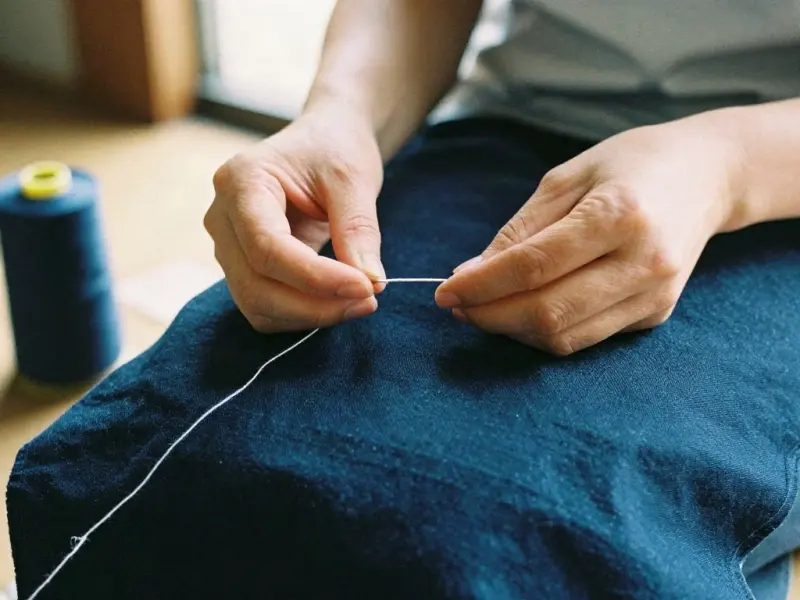
Formal robes are decorated with patterns in embroidery and appliqué. The patterns were handed down from grandmother to mother and from mother to daughter. Men carved patterns on knife sheaths (the knife is a makiri, マキリ) and trays (ita, イタ), and these too were passed down among men.
Attus is cloth woven from thread made of tree bark, such as that of the Manchurian elm. It was a product of Tokachi in the mid-19th century. The technique had died out, but a preservation society in Makubetsu is working to revive it.
In the training rooms of the Community Hall, people can make crafts such as embroidery and wood carving.
Sources: Town of Makubetsu, "Stories of local culture, Part 2"; Makubetsu Regional Plan for Promoting Ainu Policy (in Japanese)
Mukkur and upopo
The mukkur (ムックㇽ, also written ムックリ) is a mouth harp. The player lets the sound resonate inside the mouth and changes the tone with the shape of the mouth and the breath. Bamboo ones are the most common.
Upopo (ウポポ) are songs and rimse (リㇺセ) are dances. They were performed in daily life and at ceremonies, and have been handed down.
Ando Umeko (安東ウメ子, 1932–2004) was a master of the mukkur and upopo. She was born and raised in Obihiro and moved to Makubetsu when she married. She donated 68 everyday items handed down in the Ando family to Makubetsu Furusato-kan. Her albums include "Ihunke" (2001) and "Upopo Sanke" (2003).
Sources: Town of Makubetsu, "Notice of the special exhibition" and "Stories of local culture, Part 2" (in Japanese); OKI official profile

Stories told by word of mouth
All Ainu stories were passed on by word of mouth. In Tokachi, heroic tales are called sakorpe (サコㇿペ), tales of the gods oyna (オイナ) and folktales tuytak (トゥイタㇰ). Sakorpe and oyna are chanted to a melody.
The name of the Exhibition Hall, Ucaskuma, means a story handed down.
Source: Obihiro Development and Construction Department, "A journey through time along the rivers of Tokachi, Chapter 3" (in Japanese)
A short timeline
- 1858Survey by the explorer Matsuura Takeshiro. 78 kotan and 1,336 people in Tokachi
- Meiji period (1868–1912)Assimilation policies advance. Customs and salmon fishing are banned, and the Ainu language is not taught in schools
- 1899The Hokkaido Former Aborigines Protection Act is passed (repealed in 1997)
- 1959Yoshida Kikutaro builds the Ezo Culture Archaeological Museum
- 1963The Senju Community Hall is built. It becomes a place for traditional events and for making traditional clothing
- 1997The Ainu Culture Promotion Act is passed
- 2019A law is passed that recognizes the Ainu as an indigenous people for the first time
- March 2022The national government approves the Makubetsu Regional Plan for Promoting Ainu Policy
- October 2026Cirotto opens
Sources: Upopoy, "Basic facts about Ainu history and culture"; Makubetsu Regional Plan for Promoting Ainu Policy; the town's basic plan (draft)
Makubetsu place names that come from Ainu
| Name today | Ainu | Meaning |
|---|---|---|
| Makubetsu (幕別) | makunpet (マクンペッ) | river at the back |
| Tobetsu River (途別川) | tupet or topet (トゥペッ, トペッ) | marsh river. Another view is "two rivers" |
| Sarubetsu River (猿別川) | sarpet (サㇻペッ) | reed river |
| Satsunai River (札内川) | satnay (サッナイ) | river that dries up |
| Yamuwakka (止若) | yamwakkapira (ヤㇺワッカピラ) | cliff of cold water |
| Inashibetsu (稲志別) | inawuspet (イナウウㇱペッ) | river with many inaw |
| Churui (忠類) | チウルイトープイ | the fast-flowing Toberi River (当縁川) |
Source: Town of Makubetsu, "Place names in Makubetsu that come from Ainu" (in Japanese). The town's page introduces 20 place names. The romanization was added by this site.
Good manners when you visit
- Ask at reception before taking photos. For ceremonies and demonstrations, the rules differ from group to group.
- Ritual implements and altars are for prayer. They are not decorations. Do not touch them.
- Ask people for permission before you photograph them.
- "Ainu" is the Ainu word for "human being". Use it with respect.
The town's website does not state Cirotto's rules on photography. This list is based on the guidance given by Upopoy and the Sapporo Ainu Culture Promotion Center.
Going deeper
- Town of Makubetsu: Place names in Makubetsu that come from Ainu (in Japanese)The town explains the origins of 20 place names.
- Town of Makubetsu: Stories of local culture, Part 1 (in Japanese)A chronology of Yoshida Kikutaro and the museum's collection.
- Foundation for Ainu Culture: The Ainu people, history and the present (in Japanese)A supplementary reader for junior high school students (PDF).
- Obihiro Development and Construction Department: A journey through time along the rivers of Tokachi (in Japanese)Material on Ainu culture and rivers in Tokachi.
- Upopoy: Basic facts about Ainu history and cultureA basic introduction from the national centre.